Where automation reaches its limits in real production environments
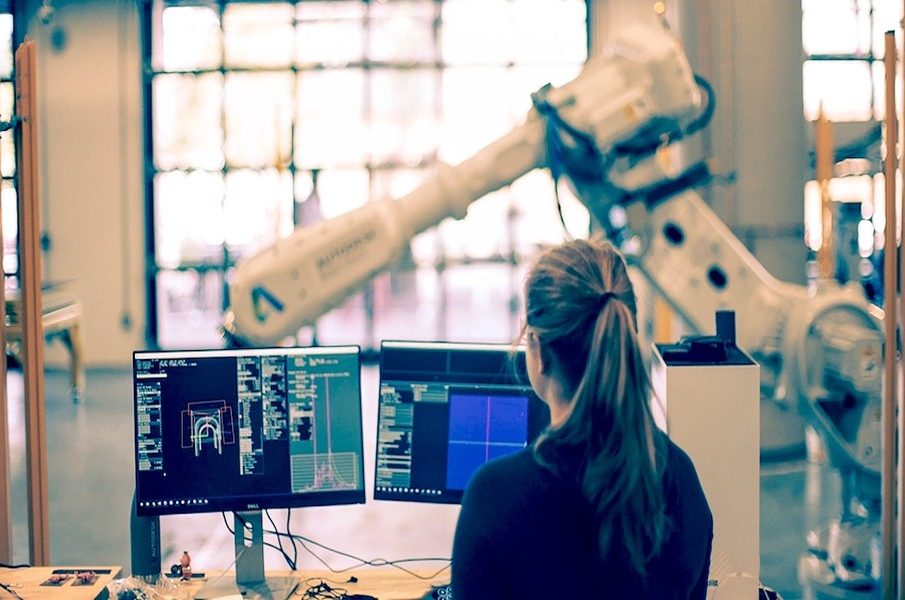
Automation has expanded rapidly across manufacturing, driven by the need for repeatability, cost control, and throughput. Yet even in highly automated plants, certain operations consistently resist full replacement by machines. These limitations do not stem from a lack of technological progress, but from the intrinsic nature of variability, uncertainty, and contextual decision-making present in real production environments. While robots excel in structured tasks with defined parameters, they struggle when conditions deviate from expected patterns. This gap between controlled scenarios and real-world variability defines the boundary where human involvement remains critical.
Production managers encounter this boundary most clearly in processes that involve non-uniform inputs. Variations in material properties, tolerances, or positioning can disrupt automated sequences that rely on consistency. Although advanced sensing systems can compensate for some of these deviations, there is a threshold beyond which the cost of adaptation outweighs the benefit of automation. At that point, human operators provide a level of flexibility that is difficult to replicate algorithmically. Their ability to interpret ambiguous situations and make rapid adjustments allows production to continue without extensive system reconfiguration.
Decision-making under uncertainty and incomplete data
One of the most persistent challenges in automation lies in decision-making when data is incomplete or ambiguous. Robots operate based on predefined rules or learned patterns, both of which depend on the availability of structured information. In contrast, human operators can synthesize partial signals, past experience, and contextual awareness to arrive at a decision. This becomes particularly relevant in quality control, troubleshooting, and process optimization, where outcomes are not always binary.
Maintenance engineers frequently rely on intuition developed through repeated exposure to equipment behavior. Subtle changes in vibration, sound, or response time may indicate an emerging issue that has not yet triggered any measurable threshold in the system. Translating this type of tacit knowledge into automated diagnostics remains a complex task. While predictive maintenance algorithms continue to improve, they still depend on historical data and predefined models, which may not capture rare or unexpected failure modes.
The role of dexterity and adaptive manipulation
Physical interaction with objects remains another domain where humans retain a clear advantage. Tasks that require fine manipulation, variable force application, or adaptation to irregular geometries are difficult to standardize. Robotic grippers and force sensors have advanced significantly, enabling automation in areas previously considered too complex. However, the range of possible variations in real-world parts often exceeds the capabilities of even the most sophisticated tooling.
This limitation becomes evident in assembly operations involving flexible materials, delicate components, or unpredictable orientations. Humans can adjust grip, angle, and sequence dynamically, often without conscious deliberation. Replicating this level of adaptability requires a combination of advanced sensing, real-time processing, and mechanical flexibility, which increases system complexity and cost. As a result, many production lines adopt a hybrid approach, where robots handle repetitive positioning tasks while humans perform the final adjustments.
Human-robot collaboration as a structural compromise
Rather than attempting to eliminate human involvement entirely, many manufacturers are redefining automation as a collaborative process. Systems designed for interaction between humans and robots aim to combine the strengths of both. Robots provide consistency and endurance, while humans contribute adaptability and contextual understanding. This approach reduces the pressure to fully automate complex processes and allows companies to focus on optimizing the interaction between different types of capabilities.
The development of collaborative tooling ecosystems reflects this shift. By examining how solutions built around OnRobotcobotics are structured, it becomes clear that the emphasis is placed on safe interaction, rapid reconfiguration, and intuitive operation rather than on complete autonomy. These systems are designed to operate in shared workspaces, enabling operators to intervene, adjust, or guide processes without stopping the entire line. This creates a more fluid production environment, where automation supports human activity instead of replacing it entirely.
Economic thresholds and diminishing returns
The decision to automate is not purely technical; it is also economic. Each additional layer of automation introduces costs related to equipment, integration, maintenance, and training. At a certain point, the marginal gains in efficiency begin to decrease while the complexity of the system continues to grow. This creates a zone of diminishing returns, where further automation does not justify the investment.
Small and medium-sized enterprises are particularly sensitive to this balance. Limited capital and the need for operational flexibility make it impractical to pursue full automation in all areas. Instead, these companies prioritize processes where automation delivers clear and measurable benefits. Tasks that require high variability, frequent changeovers, or complex decision-making are often left partially or fully manual. This selective approach allows organizations to maintain agility while still benefiting from technological advancements.
Organizational implications of keeping humans in the loop
Maintaining a human presence in automated systems has implications beyond the production floor. It influences training, workforce structure, and the distribution of responsibilities within the organization. Employees are no longer confined to repetitive manual tasks; instead, they act as operators, supervisors, and problem-solvers within automated environments. This shift requires a different skill set, combining technical understanding with the ability to manage dynamic processes.
At the same time, the integration of human and robotic work raises questions about standardization and process control. Human actions introduce variability, which must be managed to ensure consistent output. This leads to the development of interfaces and workflows that guide operator behavior without restricting flexibility. The challenge lies in designing systems that leverage human strengths while minimizing the risk of inconsistency.
Automation as a continuum rather than a binary choice
The boundary between human and machine is not fixed; it evolves with technology, economics, and organizational capabilities. What remains consistent is the need to balance efficiency with adaptability. Fully automated systems offer high performance under stable conditions, but they can become rigid when faced with change. Human involvement introduces flexibility, but also variability. Effective production systems navigate this trade-off by positioning automation along a continuum rather than treating it as an all-or-nothing decision.
Understanding where humans remain indispensable allows companies to allocate resources more effectively. Instead of pursuing automation for its own sake, organizations can focus on areas where it creates tangible value while preserving the adaptability that only human operators can provide. This perspective transforms automation from a goal into a tool-one that supports, rather than replaces, the complex reality of modern manufacturing.