When Computers Call in Sick and Keeping Your Team Working Through Hardware Hiccups
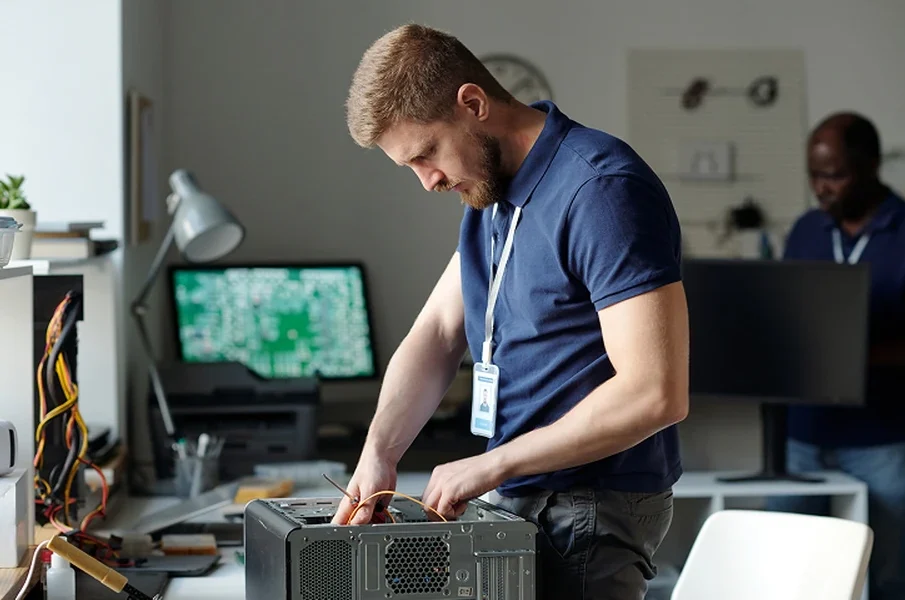
Small Hardware Problems, Fewer Business Disruptions
- Hardware issues can interrupt daily operations, delay important tasks and affect employee productivity.
- Regular maintenance helps identify potential equipment failures before they cause significant disruption.
- Reliable IT hardware support gives employees access to technical assistance when computers and peripherals stop working as expected.
- Consistent computer network maintenance helps businesses maintain dependable connections between devices, systems and shared resources.
- A proactive IT maintenance plan can reduce avoidable downtime and support more predictable business operations.
When One Uncooperative Computer Disrupts an Entire Working Day
Every office has experienced a technology problem at the worst possible moment. A computer refuses to start before a client presentation, a printer stops responding when invoices need to be sent, or an employee suddenly loses access to shared files. These incidents might appear minor, but their effects can spread quickly when several people depend on the same equipment or systems.
For businesses, keeping technology operational involves more than replacing faulty devices when they break. It requires a practical approach to troubleshooting, equipment upkeep and network reliability. Without the right support, employees may spend valuable time trying to resolve technical problems instead of completing their actual responsibilities.
This is where IT hardware support becomes an important part of daily business operations. With suitable assistance and a consistent maintenance routine, companies can address equipment issues more efficiently and reduce unnecessary interruptions. Combined with regular computer network maintenance, these measures help create a working environment where technology supports productivity rather than getting in the way.
What Happens When a Hardware Problem Brings Work to a Standstill?
A faulty computer rarely affects only the person using it. When an employee cannot access essential applications, respond to customers or retrieve important documents, other tasks may also be delayed. If the affected device supports a shared process, colleagues across different departments could experience the consequences.
Common hardware problems include overheating computers, failing storage drives, damaged cables, unresponsive keyboards and malfunctioning monitors. Some issues develop gradually, while others appear without warning. Equipment that frequently freezes, makes unusual noises or struggles with routine tasks may require attention before the problem becomes more serious.
Professional IT hardware support helps businesses identify the source of these difficulties instead of relying on repeated restarts or temporary workarounds. A technician can assess the equipment, troubleshoot possible causes and recommend repairs or replacement when necessary.
Timely intervention also helps employees avoid spending hours searching for solutions they may not have the technical knowledge to implement. Rather than allowing one malfunction to disrupt the entire day, businesses can establish a clearer process for reporting problems and restoring normal operations.
How Can Regular Maintenance Prevent Unexpected Technology Trouble?
Waiting until a computer fails completely can make an otherwise manageable issue more disruptive. Preventive maintenance offers a more practical alternative by giving businesses opportunities to identify developing problems and address equipment needs before they affect daily work.
A maintenance routine may include inspecting physical components, checking cooling systems, reviewing device performance, verifying connections and identifying equipment that is approaching the end of its useful life. Businesses can also benefit from keeping an updated inventory of their devices, warranty details and maintenance history.
Regular computer network maintenance is equally important because reliable hardware must work within a dependable network environment. Network equipment, connectivity issues and configuration problems can affect access to shared folders, cloud platforms, printers and business applications. Routine checks help identify weaknesses that might otherwise remain unnoticed until employees experience an interruption.
Maintenance schedules should reflect how equipment is used, how critical it is to operations and how frequently problems occur. A business that relies heavily on connected devices may need more frequent checks than one with simpler technology requirements.
By treating maintenance as an ongoing responsibility rather than an occasional emergency measure, companies can make equipment performance more predictable and plan technology expenses with greater confidence.
Why Does Reliable IT Support Matter When Employees Need Help Fast?
When technology fails, employees need a clear way to obtain assistance. Without an established support process, they may contact several colleagues, attempt unfamiliar repairs or continue working around a problem that requires technical attention. These responses can waste time and sometimes make the original issue harder to resolve.
A reliable IT support arrangement provides a more organised approach. Employees know where to report faults, technical teams can assess the urgency of each incident, and businesses can prioritise issues according to their operational impact.
For example, a malfunctioning workstation used for routine administrative tasks may not require the same immediate response as a device supporting a time-sensitive business process. Having a defined escalation procedure helps ensure that urgent problems receive appropriate attention.
Effective IT hardware support also involves communication. Employees should understand what is happening, whether temporary arrangements are available and what steps are needed to restore normal service. Clear updates help managers coordinate work while technical issues are being resolved.
Businesses should also consider how support arrangements fit their equipment, internal capabilities and working hours. The objective is not simply to fix broken computers. It is to reduce the amount of time employees lose to technical problems and help them return to productive work as efficiently as possible.
How Can Businesses Keep Hardware and Networks Working Together?
Computer hardware and network infrastructure are closely connected. Even a perfectly functioning workstation can become difficult to use when network access is unreliable, while network problems may initially appear to employees as faults with their own devices.
A coordinated maintenance approach considers both areas rather than treating every incident as an isolated problem. Technicians can investigate whether a recurring issue originates from an individual computer, its connections, shared network equipment or another part of the IT environment. This makes troubleshooting more systematic and helps businesses avoid repeatedly addressing the wrong cause.
Companies should also review whether their existing equipment can support current workloads. Older devices may struggle with newer applications, while insufficient network capacity can affect teams that depend on large file transfers or multiple connected systems. Planning upgrades before equipment becomes unusable gives businesses more control over costs and implementation.
Backups, appropriate security updates and documented recovery procedures provide additional protection against operational disruption. Although these measures cannot prevent every incident, they help businesses prepare for problems and recover more effectively when something goes wrong.
The most useful maintenance strategy is one that fits the organisation’s actual needs. By combining suitable technical support with regular computer network maintenance, businesses can improve reliability without waiting for every issue to become an emergency.
Keep Your Business Moving When Technology Needs Attention
Computer problems are inevitable, but prolonged disruption does not have to be a normal part of office life. With preventive checks, timely troubleshooting and a clear support process, businesses can reduce the impact of hardware failures and help employees remain focused on their responsibilities.
A dependable IT environment starts with understanding how equipment and networks support everyday operations. When businesses address developing issues early and maintain their systems consistently, they are better positioned to manage unexpected faults, plan future upgrades and maintain smoother workflows.
Contact us at MAG-IT to explore IT hardware support and maintenance solutions that help keep your business equipment dependable and your team working with fewer interruptions.