App Ratings Stagnating? Review Growth Trends And Rating Distribution For Useful Clues
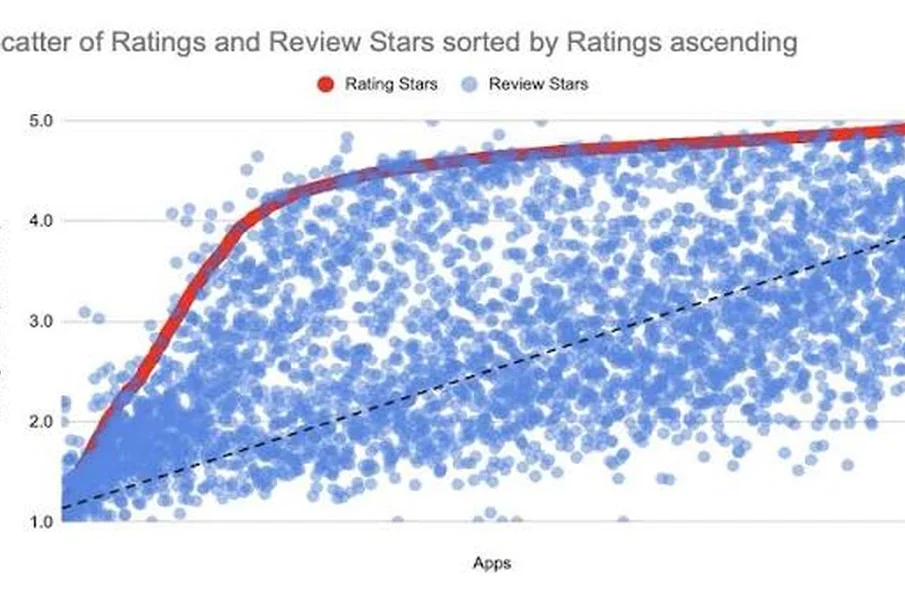
A flat star rating rarely means nothing is happening. Under that steady number, review volume and score spread keep moving. Reading app store chart data next to those movements explains why an average stops climbing. Rank changes tied to feedback spikes show exactly what users react to. Prompt timing, version resets and one-star clusters each leave distinct fingerprints worth tracing.
Averages Hide Two Very Different Stories
A 4.3 average can describe opposite situations. One app collects steady four-star verdicts. Another swings hard between fives and ones. Polarized scores point to a feature that delights one group and fails another. Only the distribution reveals which case applies.
Is Review Velocity Slowing Or Shifting?
Before judging any score, count new reviews per week. Volume tells its own story:
- Weekly totals falling while installs rise point to broken prompts.
- A sudden surge right after an update signals strong reactions.
- Steady volume paired with sliding stars hints at quality decay.
- Holiday dips mirror lower engagement, not unhappy users.
Version Resets Distort Long-Term Comparisons
Apple allows developers to reset the summary rating with a new release. Google Play, by contrast, weights recent scores more heavily. Cross-platform comparisons can mislead for that reason. Confirm reset dates before trusting any trend line.
What Do Ranking Drops Reveal About Feedback?
Category position moves when downloads and engagement change. Pairing app store chart data with dated reviews links rank losses to specific complaints. Picture a budgeting app sliding ten places the week a bank-sync bug ships. One-star mentions of syncing would spike that same week.
Where Do One-Star Clusters Come From?
Low scores rarely arrive at random. Most trace back to a single trigger:
- New OS releases spark crash complaints.
- Fresh paywalls anger longtime free users.
- Server changes break login flows.
- Intrusive ads interrupt core tasks.
The Quiet Users Behind Four Stars
Recall that budgeting app losing ten places over one sync bug. Its average might barely budge, because loyal users seldom return to rate. Stagnation often reflects who gets counted, not a quality ceiling. Satisfied people stay silent. Asking them after a successful sync changes the sample entirely. Once that quiet majority speaks, the number finally moves.
FAQs
Why does an app rating stop improving after fixes?
Older scores still anchor the average on most stores. Without a reset or fresh reviews, improvements take months to show.
How many reviews are needed to spot a real trend?
Weekly samples of roughly fifty or more give a usable signal. Smaller apps should compare monthly totals instead.
Do in-app rating prompts bias results?
Prompt timing shapes the mood of whoever responds. Triggering one after a completed task tends to capture happier users fairly.
Should developers reply to negative reviews?
Replies show active support and can prompt users to revise scores. Specific, fix-focused responses work better than generic apologies.