What Happens When a Dispenser Valve Is Too Large for the Job
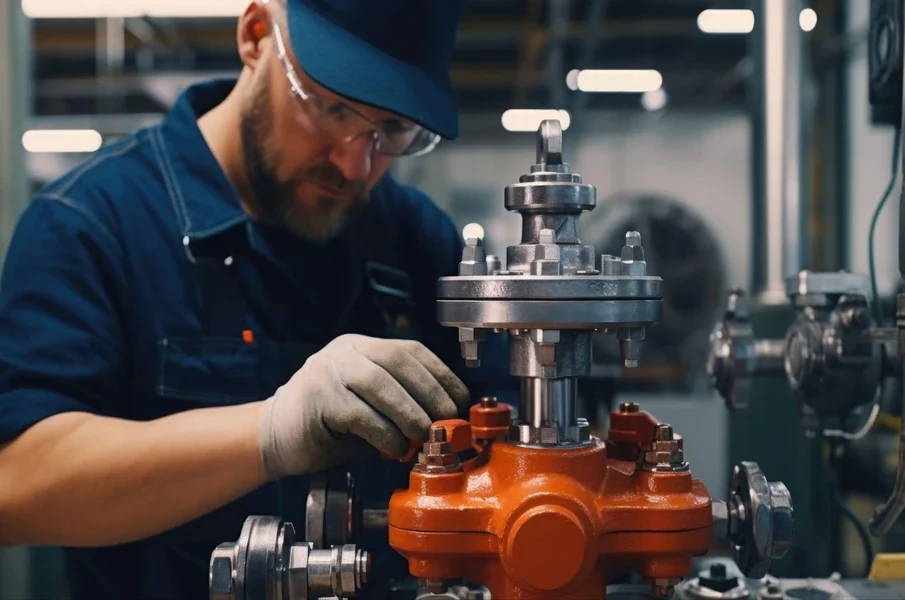
Choosing a larger valve can seem like a safe decision, since it promises higher flow and more headroom for future jobs. In practice, a dispenser valve that is too large for the task often creates more problems than it solves. Oversizing affects how precisely fluid is metered, how much material is wasted and how the wider supply system behaves. Understanding these effects helps manufacturers select equipment that suits the deposit sizes, fluids and cycle rates they actually work with.
Loss of Control Over Small Deposits
An oversized valve is built to move large volumes, which makes it difficult to dispense small, precise amounts.
- The valve’s internal volume is large relative to the target shot, so even a brief opening releases more fluid than intended.
- Operators are forced to shorten open times to the very limit of the controller, where small timing differences have a large effect on output.
- Fine dots, thin beads and micro-deposits become difficult to achieve without constant adjustment.
- The minimum achievable shot size may still be larger than the application requires, regardless of how settings are tuned.
Poor Shut-Off and Material Waste
Larger valves typically have larger seats, wider fluid chambers and slower closing action, all of which affect how cleanly each cycle ends.
- More fluid remains in the chamber after shut-off, which can continue to seep out as drips or tails.
- Stringing becomes more common with viscous materials, leaving unwanted trails between parts.
- Excess material on the workpiece often needs to be wiped away or leads to rework and rejected parts.
- Over a full production run, small amounts of overdispensing add up to significant material costs.
Reduced Accuracy and Repeatability
Consistency suffers when a valve operates at the edge of its range rather than in the middle of it.
- Short open times amplify small variations in pressure, temperature and viscosity, producing uneven shot sizes.
- The difference between the first and last deposit in a run can widen as the valve and fluid warm up.
- Quality checks become harder to pass because tolerances are tighter than the valve can reliably hold.
- Frequent recalibration is needed to keep output within acceptable limits, adding downtime to each shift.
Added Strain on the Supply System
An oversized valve affects more than the dispensing point; it also changes demands on the equipment feeding it.
- High flow capacity can draw fluid out of a pressurised tank faster than the regulator is set up to handle, causing brief pressure dips between shots.
- Larger fluid lines and fittings are often installed to match the valve, increasing the volume of material held in the system and the amount lost during purging.
- Bubbles and pressure pulses are more likely when the supply cannot keep pace with the valve’s sudden demand.
- Cleaning and changeovers take longer because there is more internal surface and trapped fluid to flush.
Early Signs of a Mismatched Valve
Oversizing is not always obvious during installation, but certain patterns tend to appear once production begins.
- Deposits consistently come out larger than specified, even at the lowest practical settings.
- Operators report frequent dripping, tailing or stringing that cleaning alone does not resolve.
- Output varies noticeably between shifts or after short idle periods.
- Material consumption is higher than planned without a matching increase in output.
Matching the Valve to the Job
A correctly sized valve works within its comfortable operating range, where timing, pressure and fluid behaviour can be controlled with confidence. Selection should start with the smallest and largest deposits required, the fluid’s viscosity and the target cycle rate, rather than a general preference for extra capacity. Where application requirements vary widely, using different valves for different tasks is often more effective than relying on one large unit. With the right match in place, manufacturers gain cleaner deposits, less waste and more predictable results from every production run.
Browse Unicontrol’s products today to find fluid dispensing valves in a range of sizes, so you can pick one that matches your deposit requirements best.